
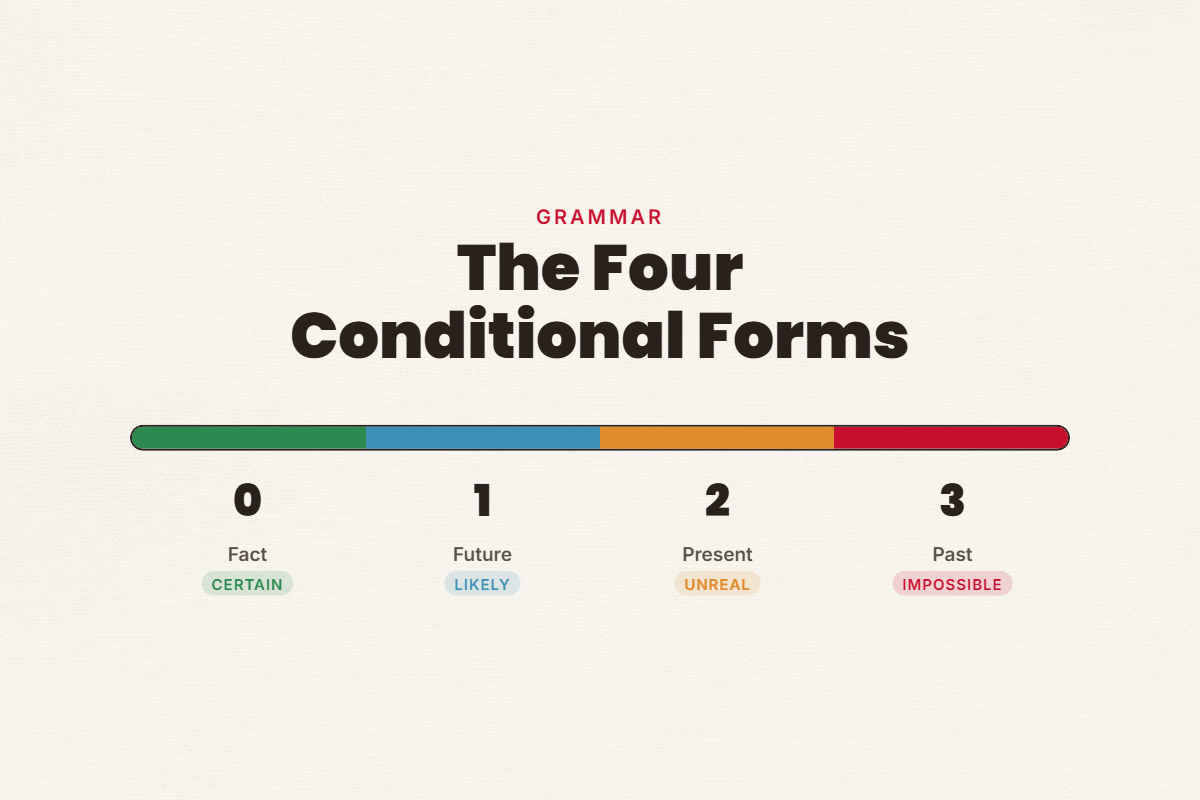
English has four main conditional forms, used to talk about the relationship between a condition and its result. Each one signals a different degree of likelihood, from certain facts to impossible past situations. Here is a breakdown of all four, with their structure, examples, and typical use.
Zero Conditional
Structure: If + present simple, present simple
Examples:
- If you heat water to 100 degrees Celsius, it boils.
- If you mix red and blue, you get purple.
Usage: Used for general truths or scientific facts that are always true under certain conditions.
First Conditional
Structure: If + present simple, will + base verb
Examples:
- If it rains tomorrow, we will stay indoors.
- If they finish their project early, they will go out for dinner.
Usage: Used for real and possible situations in the future. It expresses a condition that might realistically happen.
Second Conditional
Structure: If + past simple, would + base verb
Examples:
- If I were you, I would take the job offer.
- If we had a car, we could drive to the beach.
Usage: Used for hypothetical or unlikely situations in the present or future. It often expresses dreams, suggestions, or unreal situations.
Third Conditional
Structure: If + past perfect, would have + past participle
Examples:
- If she had studied harder, she would have passed the exam.
- If we had left earlier, we would not have missed the train.
Usage: Used for situations that did not happen in the past. It expresses regrets or hypothetical outcomes of past actions.
Leave a Reply