
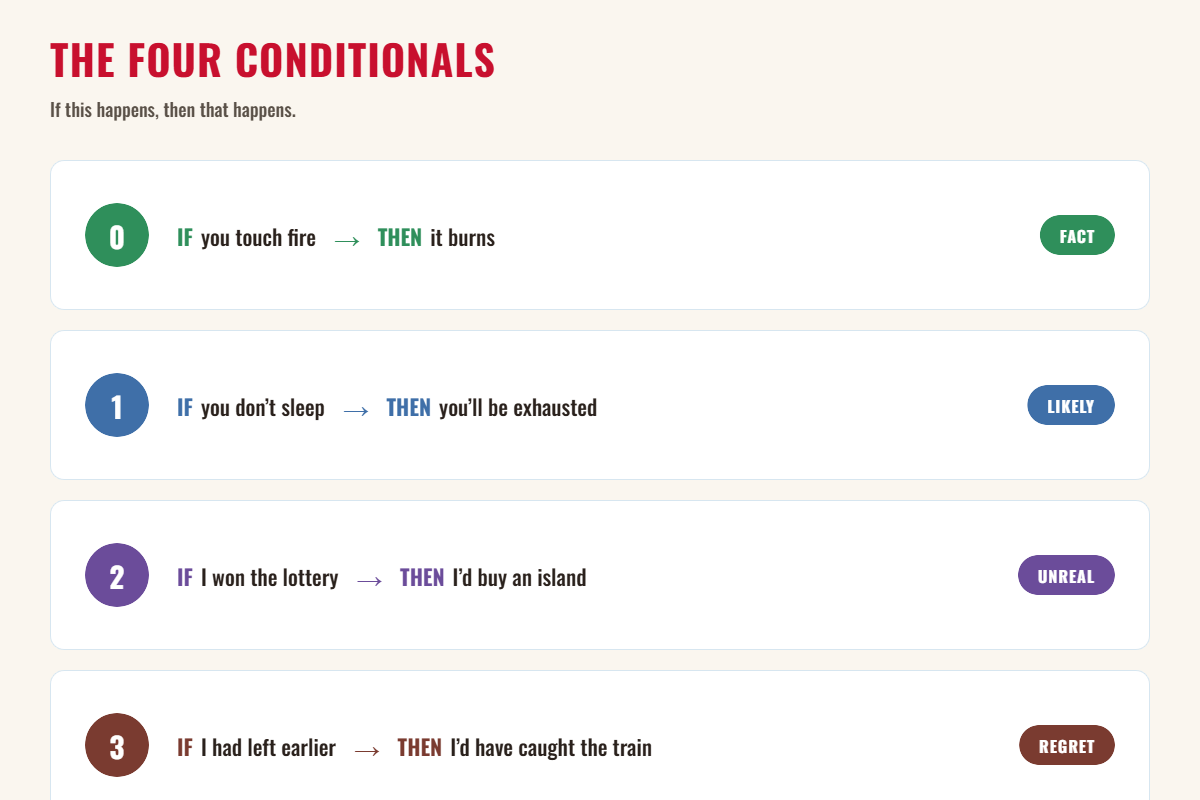
English has four main conditional forms, used to talk about the relationship between a condition and its result. Each one signals a different degree of likelihood, from certain facts to impossible past situations.
Zero Conditional
Structure: If + present simple, present simple
“If you touch fire, it burns.”
Always true. For facts and general truths. You can swap “if” for “when” and the meaning stays the same.
First Conditional
Structure: If + present simple, will + verb
“If you don’t sleep, you’ll be exhausted tomorrow.”
A real possibility. For future situations that could realistically happen.
Second Conditional
Structure: If + past simple, would + verb
“If I won the lottery, I would buy an island.”
Not real. For dreams, imagination, and unlikely situations. Also used for advice: “If I were you, I’d apologize.”
Third Conditional
Structure: If + past perfect, would have + past participle
“If I had left earlier, I would have caught the train.”
Too late to change. For the past, when things happened differently. Often expresses regret.
Leave a Reply